News
Webbing Applications and Printing Technologies: A Comprehensive Guide
Webbing is a flexible industrial and consumer accessory, typically woven into narrow strips from various fibers. It is widely used across industrial and commercial applications.
Types of Webbing
1. Apparel & Garment Accessories
Mainly used for identification, decoration, and functional purposes.
In garment accessories:
- Labels/Woven tags: Size labels and composition labels inside collars or garments
- Decorative tapes: Hoodie drawstrings, side stripes for sports pants, piping tape for down jackets
- Functional straps: Adjustment straps for outdoor jackets, backpack shoulder straps
2. Footwear & Headwear
- Shoelaces and decorative upper tapes for sports shoes and leather shoes
- Brim tapes and adjustable nylon straps for baseball caps
- Carry handles for shopping bags
3. Fashion Accessories
- Fabric belts
- Lanyards for travel, conferences, and group identification
- Staff ID lanyards
- Bracelet webbing and mobile phone straps
4. Outdoor Sports Equipment, Luggage & Bags
- Backpack shoulder straps, handles, luggage binding straps
- Outdoor equipment: mountaineering harness straps, tent guy lines, sleeping bag compression straps
- Gun slings and camera straps
5. Pet & Gift Applications
Pets provide emotional value, and the pet market has grown rapidly in recent years.
- Pet collars and leashes
- Decorative gift ribbons and straps
6. Medical & Military Applications
- Medical: ventilator mask straps, surgical instrument fixing straps, tourniquets, elastic bandages
- Security & military: tactical vest webbing, ballistic insert pockets, parachute straps
- Automotive seat belts
Webbing Printing
There are several common printing methods for webbing. Screen printing, hot foil stamping, and sublimation heat transfer are the most mature technologies, with corresponding automated equipment available on the market, such as automatic roll-to-roll webbing screen printers, roll-to-roll foil stamping machines, and webbing sublimation transfer machines.
1. Screen Printing
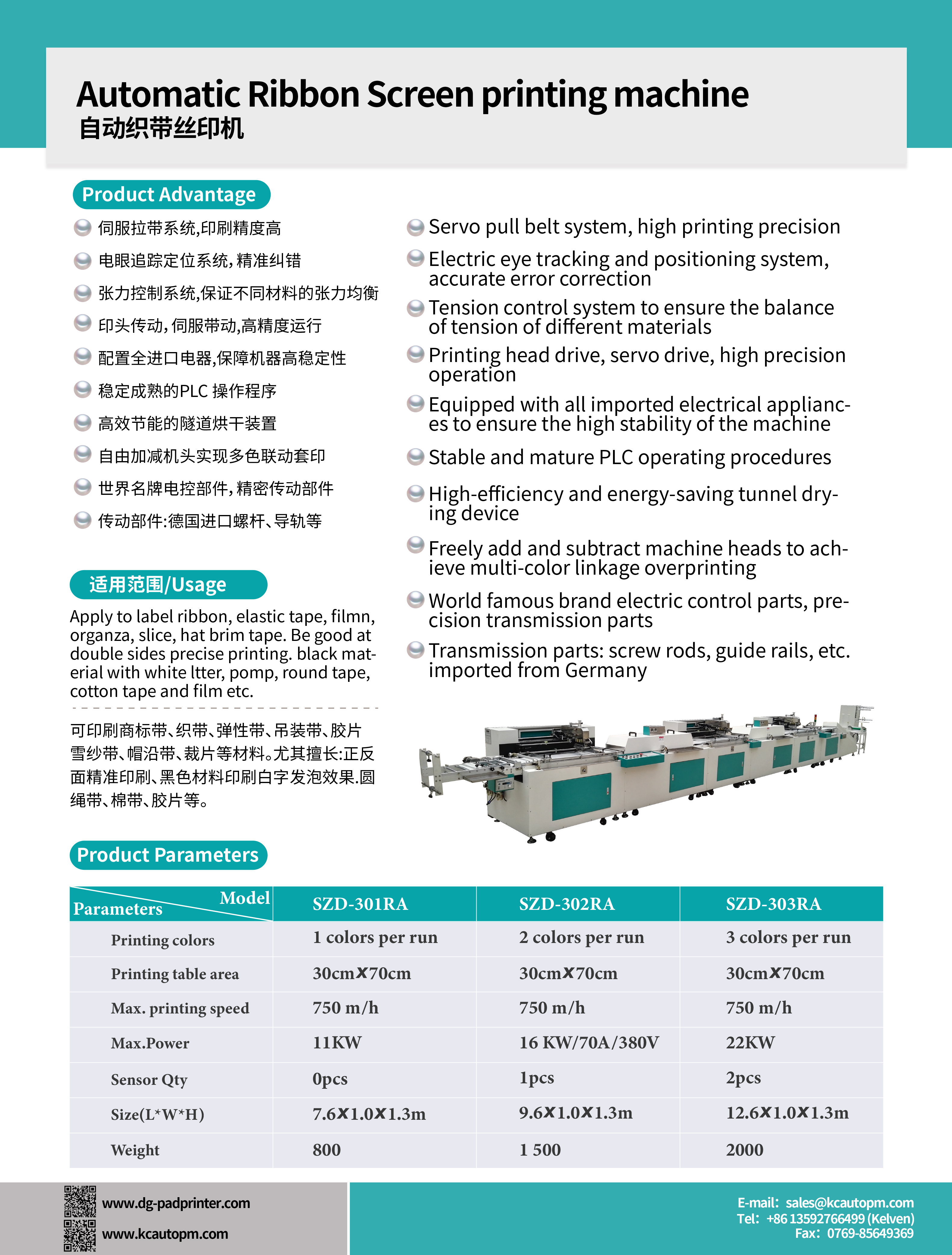
Roll-to-roll webbing screen printing machines are fully automatic continuous printing systems designed for webbing, ribbons, and elastic tapes. The core structure consists of four sections: unwinding, printing, drying, and rewinding. A roller-type foil stamping unit can be added at the rear end to integrate screen printing and foil stamping.
Core Structure & Working Principle
• Unwinding Section:
Variable-frequency/servo feeding, closed-loop tension control, and automatic web guiding with dancer roller buffering ensure stable material feeding and prevent stretching or misalignment, significantly improving production efficiency.
• Printing Section:
Servo-driven screen frame and squeegee, photoelectric tracking positioning, optional CCD vision alignment (±0.02–0.05 mm) for high precision, supporting single-color and multi-color overprinting. Adjustable screen distance ensures clear dot quality.
The most critical aspect is the webbing transport system. Since webbing is soft and easily deformed, synchronous belt servo traction is widely used to maintain printing accuracy.
• Drying Section:
IR/UV/hot air drying tunnel with zoned PID temperature control (±2–3°C), ensuring proper ink curing without sticking. Drying length and power can be customized according to ink types.
• Rewinding Section:
Constant tension rewinding, automatic counting, and abnormal alarm functions reduce material waste.
• Control System:
PLC + touchscreen with servo drives and imported electrical components. Stable operation for 8 hours continuous production.
Automatic webbing screen printing machines are available in single-color, two-color, three-color, four-color, and five-color configurations.
2. Foil Stamping
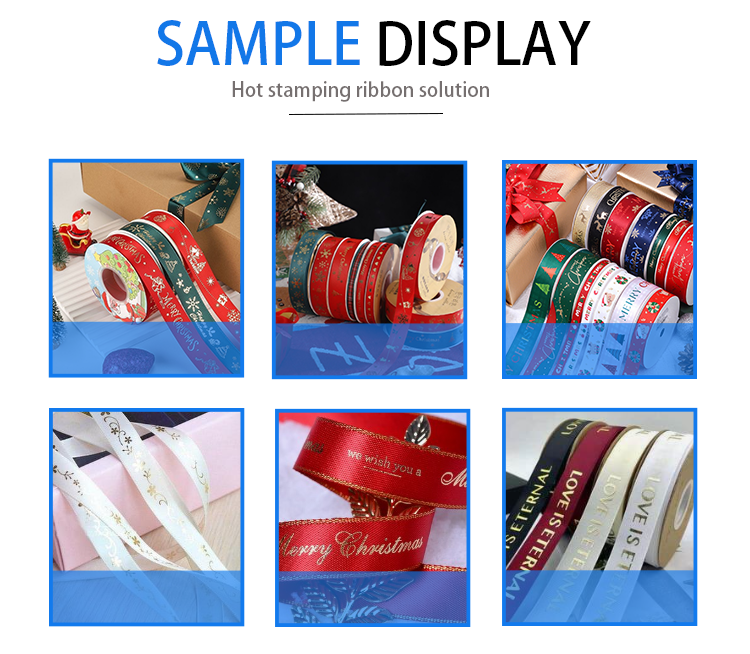
Webbing can be foil stamped directly using flatbed roll-to-roll foil stamping machines, or indirectly using a screen printing machine combined with a foil stamping unit. The latter produces better foil stamping results.
Currently, the popular solution is to install a foil stamping unit at the rear of the automatic webbing screen printer—between the drying section and rewinding section—allowing raised and textured foil effects.
Foil stamping is mainly suitable for synthetic fiber webbing such as:
- Polyester (good heat resistance and strong adhesion)
- Nylon webbing
Special adhesives are required, and foil stamping is less commonly used for pure cotton webbing.
Foil stamping is ideal for high-end applications such as:
- Luxury brand logos
- Sportswear size labels
- Decorative tapes for wedding dresses and sportswear badges
- Premium gift packaging ribbons
-
3. Heat Transfer (Sublimation Printing)
Webbing sublimation heat transfer is also a popular decoration technology. The process uses water-based inks, making it more environmentally friendly. Combined with digital printing, it offers the richest color range.
The design is first printed onto transfer paper, then transferred onto webbing using high temperature. The roller heat transfer machine uses a steel drum and flexible blanket to form a stable pressure gap. As the transfer paper and webbing pass through, the image is transferred onto the webbing surface.
Sublimation heat transfer provides the best performance for:
- Photo-quality images
- Gradient designs
However, due to color gamut loss during transfer, the color saturation is slightly lower than screen printing.
CATEGORIES
- Inkjet printer
- Roller transfer machine-200mm
- Roller sublimation machine-420mm
- Roller sublimation machine -610mm
- Roller sublimation machine-800mm
- Roller sublimation machine-1000mm
- Laser cutting machine
- Heat press machine
- Ribbon zipper heat transfer machine
- Cloth rolling machine
- Screen printing machine
- Paper and ink
- Spare parts
LATEST NEWS
CONTACT US
Name: lusa zhong
Mobile:+86 13829127980
Tel:+86 13829127980
Whatsapp:008613829127980
Email:sales@zsheatpress.com
Add:Fuma Road, Humen Town, Dongguan City, Guangdong Province, China