News
Laser Cutting Machines: Empowering the Garment Industry, Creating Quality Life
Laser technology is one of the most groundbreaking core technologies of the 21st century. Although its large-scale application in the garment industry has only developed rapidly over the past six years, rising global labor costs and increasing demand for personalized fashion have driven explosive growth in laser cutting technology. This transformation is accelerating the shift of garment manufacturing from labor-intensive to technology-driven production.
With advantages such as high precision, flexibility, and non-contact processing, laser cutting machines are reshaping the garment manufacturing landscape. They effectively solve common issues in traditional cutting methods, including rough edges, fabric fraying, and excessive material waste. By 2026, with the integration of CCD vision recognition and CNC control technologies, laser cutting systems are evolving toward intelligent, unmanned, and eco-friendly solutions, becoming essential equipment for digital transformation and quality improvement in garment manufacturing.
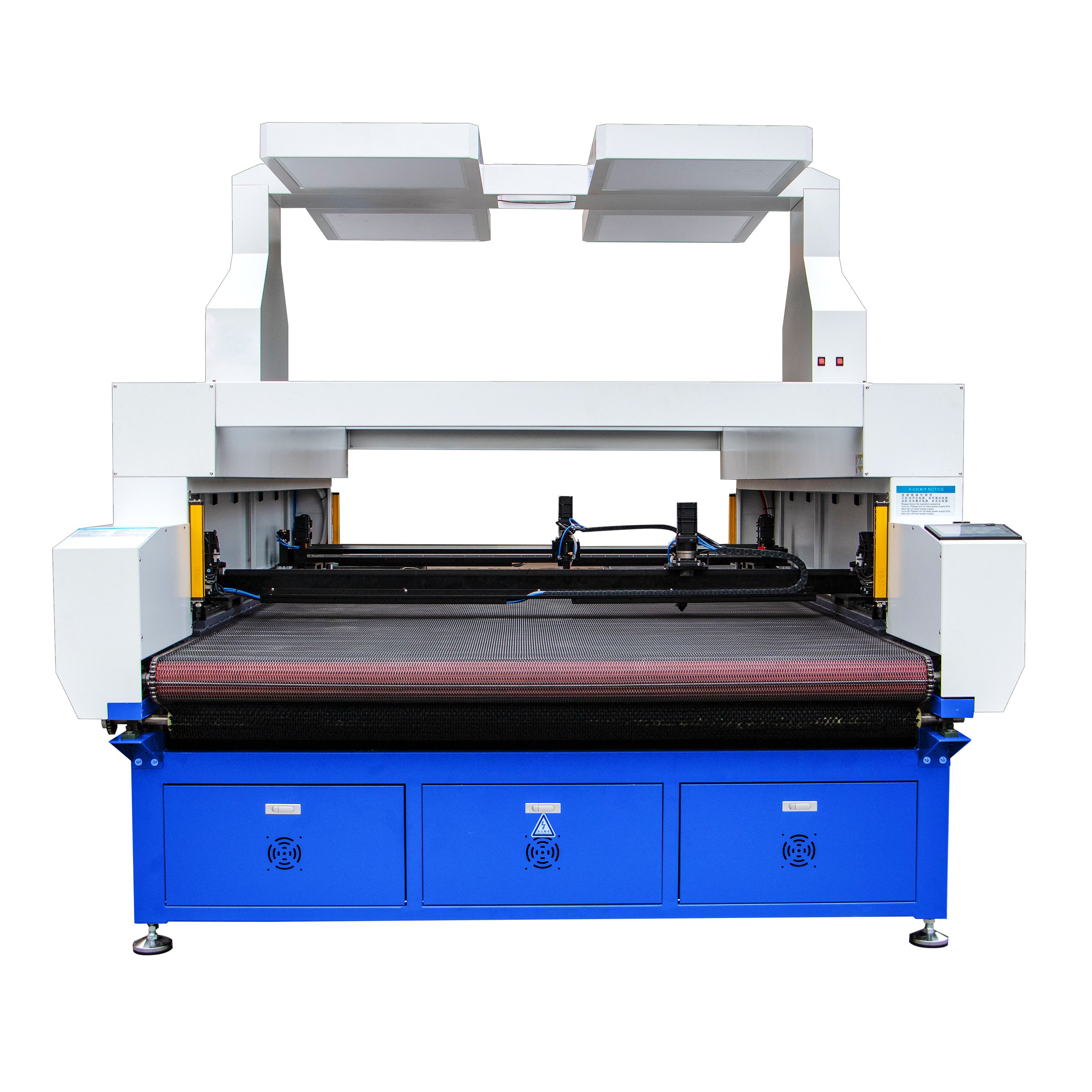
I. Core Applications of Laser Cutting Machines in the Garment Industry
1. Precision Cutting for All Fabric Types
Laser cutting machines are compatible with a wide range of flexible materials, including cotton, linen, silk, synthetic fabrics, leather, and denim. They support both single-layer precision cutting and multi-layer batch processing.
- For lightweight fabrics such as chiffon and lace, the cutting edges are smooth and clean, with sealing widths ≤0.1mm, eliminating the need for secondary processing
- For thicker fabrics like denim and canvas, multi-stage power control enables one-pass cutting, improving efficiency by over 40%
- Many well-known brands have achieved industrial-level consistency between design parameters and finished products
2. Supporting High-End Customization and Creative Design
Laser cutting machines are widely used in high-end fashion, wedding dresses, and designer garments, enabling intricate hollow patterns, engraving, and irregular shapes with high precision.
- CAD drawings can be imported directly for rapid customization
- Suitable for breathable holes in sportswear and hotfix templates
- Enhances artistic expression and premium garment detailing
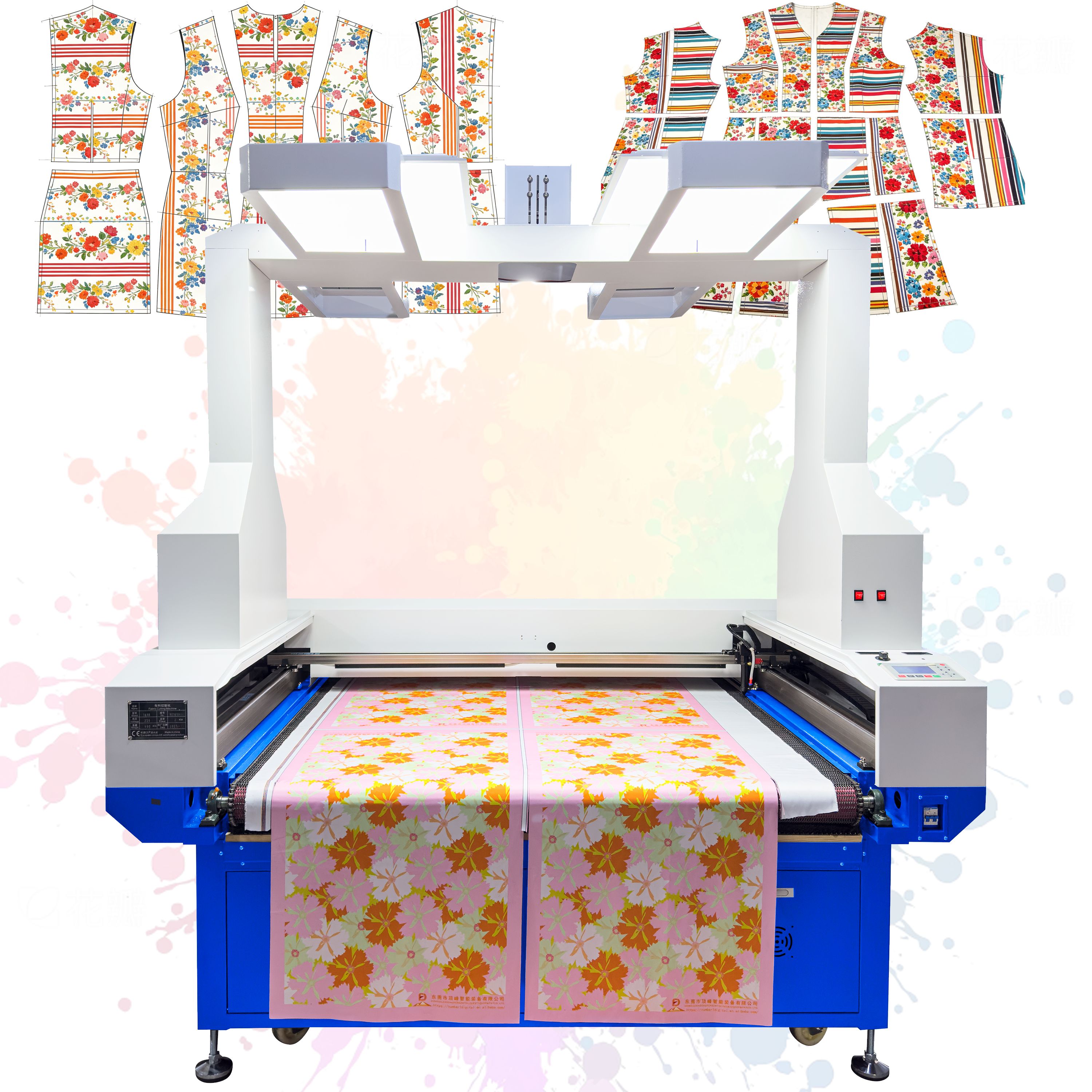
3. Integration with Roller Printing to Reduce Labor Costs
Roller printing is an environmentally friendly textile printing method. Traditional processes require cutting first, then manual placement, followed by heat transfer, which demands heavy labor and harsh working conditions.
Laser cutting machines optimize this workflow:
- First complete roller printing
- Then perform laser cutting
- Reduce labor requirements and improve working conditions
- Improve automation in screen printing workshops
4. Efficient Processing of Garment Accessories
Garments consist of both fabric pieces and accessories. Laser cutting machines can precisely process labels, tags, zippers, and buttons.
- Irregular cutting and precision punching are 2–3 times faster than traditional cutting beds
- Intelligent nesting reduces material waste by 10%–15%
- Laser engraving of QR codes reaches 2000 DPI for product traceability
- Processing costs reduced by up to 50% compared to traditional printing
II. Development Trends of Laser Cutting Machines in 2026
1. Intelligent Automation
By 2026, AI vision systems will become standard features.
- High-precision CCD cameras detect fabric patterns and defects
- Automatic compensation path generation
- Irregular processing efficiency increased by 55%
- Digital twin technology reduces setup time to one-fifth
- Cloud-based collaboration enables digitalized production workflows
2. High-Speed and High-Precision Processing
Picosecond and UV ultra-fast lasers are entering industrial applications.
- Heat-affected zone reduced to within 50μm
- 80% reduction compared to traditional nanosecond lasers
- Cold cutting technology eliminates burn marks and burrs
- Ideal for elastic and premium fabrics
3. Unmanned Production
Laser cutting units integrated with:
- Automatic feeding systems
- Loading and unloading systems
- Smart warehousing
This enables 72-hour continuous unmanned operation. Robotic arms can connect laser cutters with roller printing and screen printing machines, forming fully automated garment production lines.
4. Green and Sustainable Manufacturing
Driven by environmental regulations:
- Energy-efficient lasers become standard
- Enclosed dust removal systems improve working conditions
- Compliance with EU ERP energy standards
- Smart nesting and waste recycling enable circular production
CATEGORIES
- Inkjet printer
- Roller transfer machine-200mm
- Roller sublimation machine-420mm
- Roller sublimation machine -610mm
- Roller sublimation machine-800mm
- Roller sublimation machine-1000mm
- Laser cutting machine
- Heat press machine
- Ribbon zipper heat transfer machine
- Cloth rolling machine
- Screen printing machine
- Paper and ink
- Spare parts
LATEST NEWS
CONTACT US
Name: lusa zhong
Mobile:+86 13829127980
Tel:+86 13829127980
Whatsapp:008613829127980
Email:sales@zsheatpress.com
Add:Fuma Road, Humen Town, Dongguan City, Guangdong Province, China